


What a good tarmac job actually involves
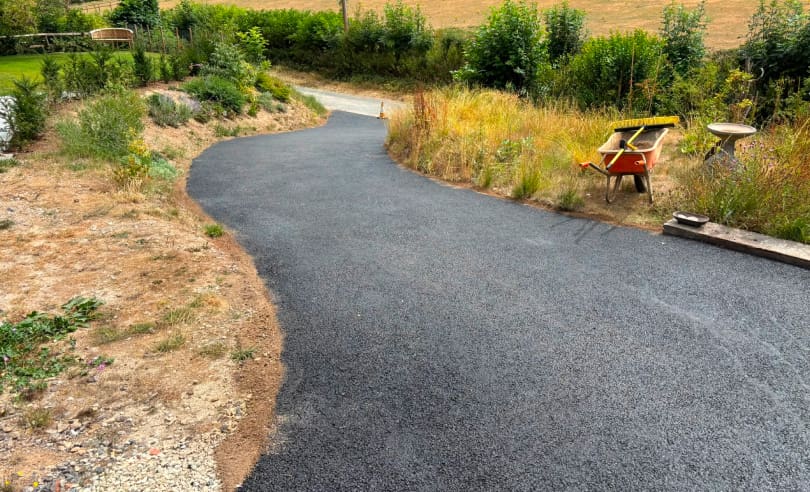
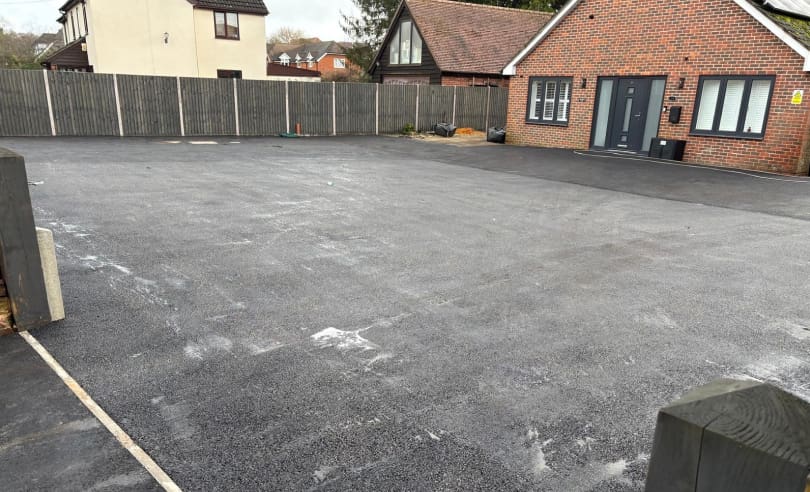
Excavation to the right depth, a properly compacted sub-base (this is the step that determines whether it lasts), and two layers of tarmac — a base course and a top course — rolled and compacted while still warm. A lot of tarmac driveway problems that show up within a year or two trace back to skipping the base course or not compacting the sub-base properly.
Finishing details
We typically edge tarmac driveways with block paving or kerbing for a cleaner line and to stop the edges breaking away over time. Drainage falls are built in during installation so water moves away from the house rather than pooling.
Resurfacing vs full replacement
If your existing tarmac is cracking but the sub-base underneath is sound, resurfacing (a new top layer over the existing base) is often a genuine option and considerably less disruptive than a full dig-out. We’ll tell you honestly on the site visit which applies to your driveway.
Tarmac driveways in Andover, Newbury and Basingstoke
We install and resurface tarmac driveways throughout all three towns and the surrounding villages. See our Andover, Newbury and Basingstoke pages for local detail.




Frequently Asked Questions
How long does a tarmac driveway last?
Fifteen to twenty years or more with a properly compacted sub-base — significantly less if that step is skipped, whatever the tarmac itself is like.
Can you resurface an existing tarmac driveway rather than replacing it?
Often yes, provided the sub-base is sound — we assess this on the site visit rather than assuming either way.
Is tarmac cheaper than block paving?
Generally yes, particularly for larger areas, though it offers less choice in colour and pattern.
How soon can I drive on a new tarmac driveway?
We’ll confirm exact timing on the day, but it’s typically a short period before light use and longer before heavier vehicles.
Call us today for a free tarmac driveway quotation.
Talk to our friendly family team on 01264771177 to schedule your free site visit.